
Capacitance
Epsilon
One electrode, measured against ground.
Epsilon samples capacitance up to 2,000 times per second and detects changes on the femtofarad scale. Connect the probe to the front BNC and use the pipe body or a separate grounded conductor as the reference.
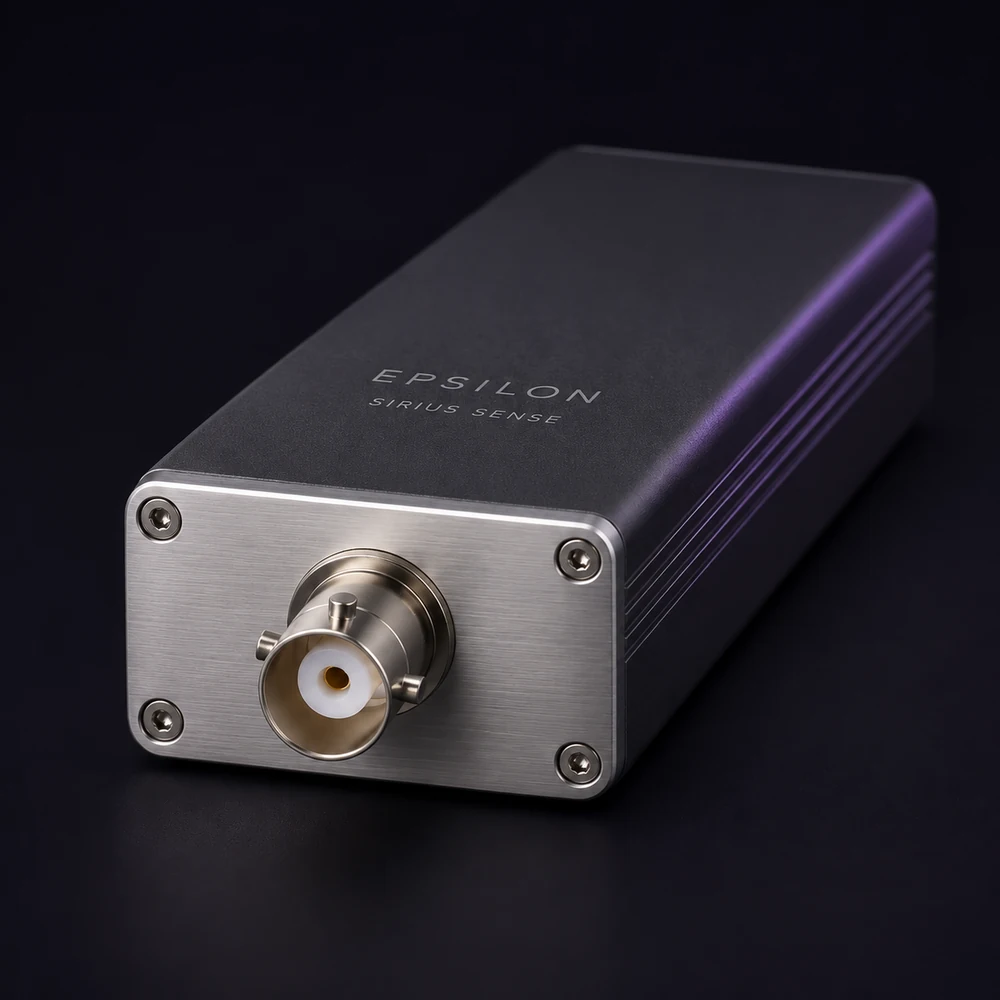
Enclosure conceptFront · Ground-referenced probe input
- Sampling rate
- Up to 2 kS/s
- Sample interval at 2 kS/s
- 0.5 ms
- Capacitance changes
- Femtofarad (fF) scale
- Sensor connection
- 1 BNC · probe to ground
One Ethernet cable carries data and supplies power over PoE. When several Epsilon modules share an IEEE 1588 clock, their timestamps let you compare when an interface passes each probe.
Conductivity
Sigma
Separate drive and receive electrodes.
The TX socket applies an AC voltage to the emitter. The RX socket measures current at the receiving electrode. Sigma uses that current and voltage to determine conductance. The probe’s cell constant converts the result to fluid conductivity.
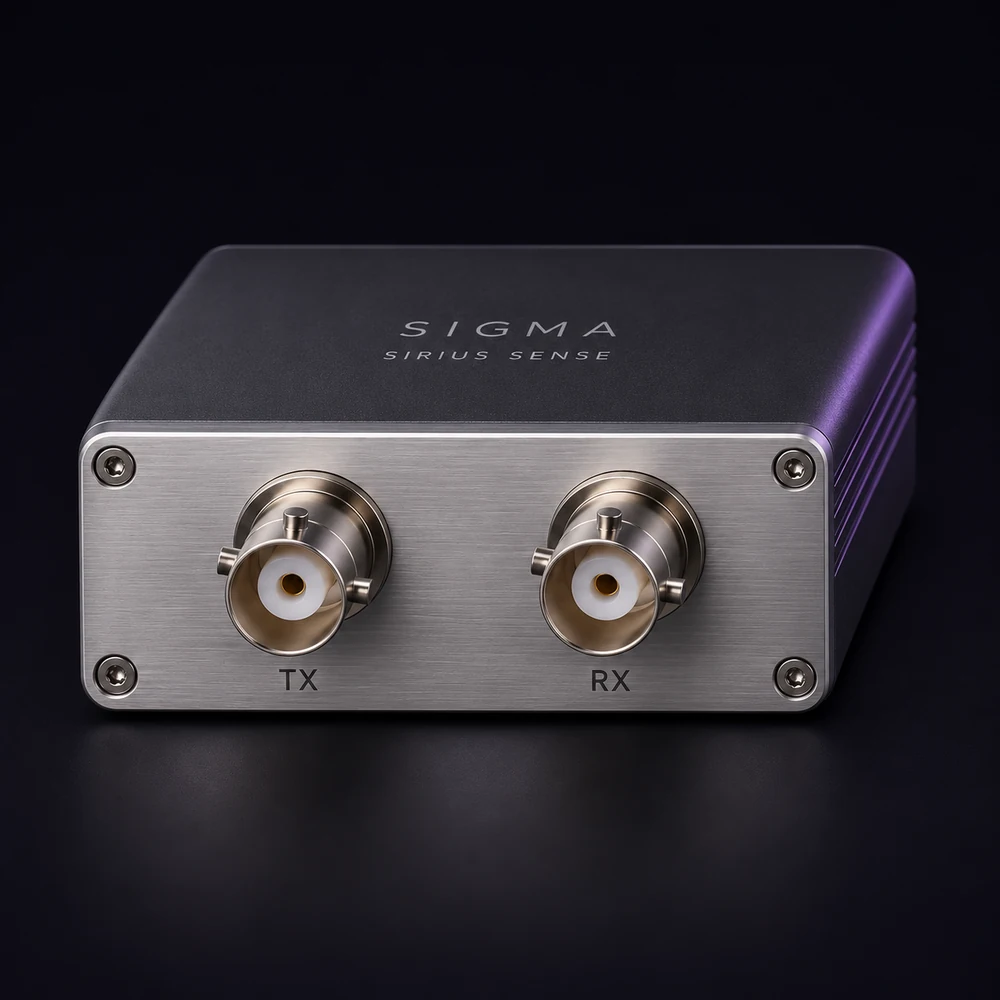
Enclosure conceptFront · TX and RX BNCs
- Cell conductance · design target
- 0.1 µS to 10 S
- Excitation
- Adjustable AC amplitude and frequency
- Measurement range
- Automatic range selection
- Sensor connection
- 2 BNCs · TX and RX
With a cell constant of 1 cm⁻¹, a conductance of 1 mS corresponds to a fluid conductivity of 1 mS/cm.